Azərbaycan
  Русский
 Early Detection System
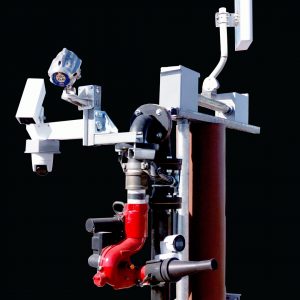
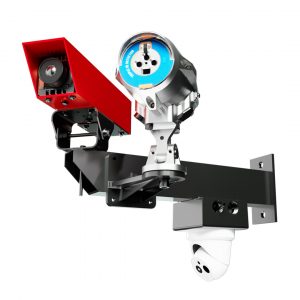
Thermal imaging, flame and smoke analytics that watch storage piles, tipping floors and process lines for developing fires.
Fire Rover early fire detection and remotely operated suppression for waste, recycling and other high-risk industrial sites — introduced and supported in Azerbaijan by ZE-Tronics.
 Supply · Installation · Service in Azerbaijan
Waste and recycling facilities have a fire problem that conventional systems handle poorly. Fires start inside piles and loads, often from discarded lithium-ion batteries, and smoulder before they break out. By the time heat reaches a sprinkler head in a tall building — or there is no roof at all — the fire is already large. Fire Rover, a company from Michigan, USA, founded in 2015, was built around that problem.
The result is earlier intervention, far less water, and fewer business interruptions. Fire Rover reports FM Approval among its milestones.
Our catalogue includes the Early Detection System, the Continuous Suppression System, the Mobile Suppression Unit and OnWatch mobile detection. Fixed systems protect permanent storage and process areas; mobile units cover hot work, construction phases and changing layouts.
For the wider picture, including pile management and why lithium-ion batteries change the risk, read our article on fire detection and suppression for waste and recycling facilities.
ZE-Tronics surveys the site, studies camera coverage and cannon reach, checks water, drainage and power, and designs the integration with the existing fire alarm system. We install and commission the equipment, agree the monitoring and response arrangement with you, and train your operators. See our work in industrial and manufacturing and infrastructure projects, or contact us to discuss your site.
Thermal imaging, flame and smoke analytics that watch storage piles, tipping floors and process lines for developing fires.
Fixed installation that directs a targeted water or agent stream at the verified hot spot.
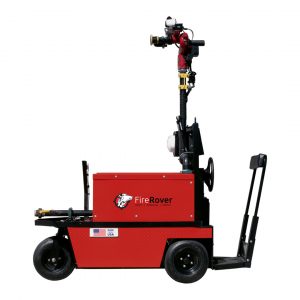
Standalone suppression units for areas without a suitable water supply.
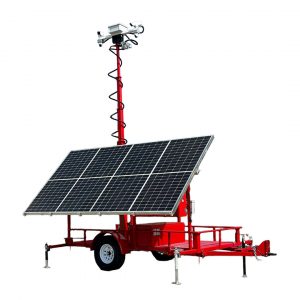
Trailer-style system with onboard agent storage for temporary protection, such as hot work or changing layouts.
Camera-based mobile monitoring with verified alerts for temporary or changing risks.
Scalable, mobile suppression that can be deployed where the risk is.
Fire and gas systems fail at the handover points between vendors. We own every step, so there are none.
Sprinklers react to heat at the ceiling, which in an open yard or a large building can be too late. Fire Rover watches surfaces with thermal and video analytics, alerts at an early stage, and lets a person confirm the fire before a targeted stream is aimed at the hot spot. Less water is used and false discharges are avoided.
It was developed for waste and recycling, where hot loads and lithium-ion batteries cause frequent fires. It is also used in metal and wood processing, EV fleet areas, marine operations and aircraft hangars.
Fire Rover's model is built around human verification of alerts. For projects in Azerbaijan, the monitoring and response arrangement is agreed during design, together with the site's own emergency procedures.
No. It adds early detection and targeted suppression for specific high-risk areas. The building fire alarm and any required fixed systems remain in place, and we integrate the two.
A site plan, the type and size of stored material, pile heights, available water and power, and your incident history. A site visit usually follows.
Send us a model number, a datasheet or an equipment list. Our engineers reply within one business day.
Contact a safety engineer