Azərbaycan
  Русский
 Flame scanners
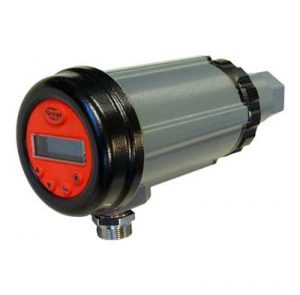
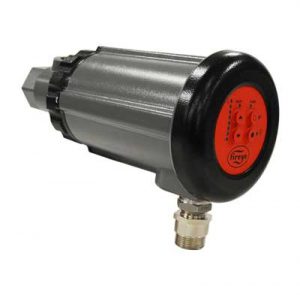
InSight and Phoenix series UV and IR scanners that confirm the presence of a flame at each burner, including self-checking designs for continuous operation.
Fireye flame scanners, flame safeguard controls and burner management systems for boilers, heaters and furnaces — selected, supplied, commissioned and serviced by ZE-Tronics in Baku.
 Supply · Installation · Service in Azerbaijan
Most fired equipment accidents happen during start-up or after a flame goes out unnoticed. The job of a flame safeguard system is simple to state: never let fuel flow into a furnace unless a flame is proven, and shut it off within seconds if the flame disappears. Fireye, based in New Hampshire, USA, has built flame scanners and burner controls for that job for decades, for boilers, process heaters and furnaces in industry and power generation.
ZE-Tronics supplies Fireye equipment in Azerbaijan and supports it on site — from choosing the scanner to setting up the flame signal during commissioning.
A flame scanner looks into the furnace and reports whether its burner is alight. Fireye offers UV and IR scanners in several series. In our catalogue you will find the InSight Series 4 (95S4UV and 95IRS4) and the Phoenix Series 2 (85UV and 85IR).
On a multi-burner boiler or heater the real challenge is discrimination: each scanner must see its own flame and ignore the burners around it. That depends on sighting, the flame’s shape and the scanner’s settings as much as on the model.
BurnerLogiX flame safeguard controls sequence the burner: purge, pilot ignition, main flame proving, running and safe shutdown. Nexus parallel-positioning controls set fuel and air to hold efficient, stable combustion. SureFire II igniters and pilots complete the start-up chain. Where burner management forms part of a safety instrumented system, we design the interface with the plant’s safety logic and the DCS through our ICSS integration work.
For a deeper look at the subject, read our practical guide to burner management and flame scanners. Fireye equipment is part of our work in petrochemical, power generation and industrial plants. Contact us with your scanner model or burner details.
InSight and Phoenix series UV and IR scanners that confirm the presence of a flame at each burner, including self-checking designs for continuous operation.
BurnerLogiX and related controls that sequence purge, ignition, flame proving and shutdown for single-burner equipment.
Controls and interfaces for multi-burner boilers and fired heaters, working alongside the plant's safety system.
Nexus parallel-positioning controls that set fuel and air for efficient, stable combustion.
SureFire II spark igniters and gas pilots for reliable light-off.
Displays, sensors, actuators, cooling and purge-air fittings for scanners.
Fire and gas systems fail at the handover points between vendors. We own every step, so there are none.
ZE-Tronics supplies Fireye scanners, flame safeguard controls and spares in Baku. Our catalogue includes the InSight Series 4 (95S4UV / 95IRS4) and Phoenix Series 2 (85UV / 85IR) scanners, and we can source other Fireye models on request.
UV scanners suit gas flames and many oil flames and respond well to the flame root. IR scanners respond to flame flicker and are often used for oil and solid fuels. On multi-burner equipment the key question is whether the scanner can tell its own burner from its neighbours, so sighting matters as much as the sensor type.
Common causes are a dirty or hot lens, poor sighting, misadjusted flame signal thresholds, a failing scanner or wiring faults. We check signal strength, cooling air, alignment and settings, and review the event history before replacing anything.
A scanner that regularly tests its own sensor, for example with a shutter, so that a failed sensor cannot keep reporting a flame. It is required for burners that run continuously for long periods.
Yes. We assess the existing sequence and hardware against current codes, propose a replacement or upgrade, and commission it during a planned outage.
Send us a model number, a datasheet or an equipment list. Our engineers reply within one business day.
Contact a safety engineer