Azərbaycan
 Русский
Flame detection
Multispectrum IR and UV/IR detectors selected for hydrocarbon, hydrogen and flare-affected areas.
Offshore platforms, onshore terminals, pipelines and refineries in Azerbaijan need fire and gas protection that detects early, acts reliably and stays calibrated for decades. ZE-Tronics engineers, supplies, installs and maintains it from Baku.
 Industry
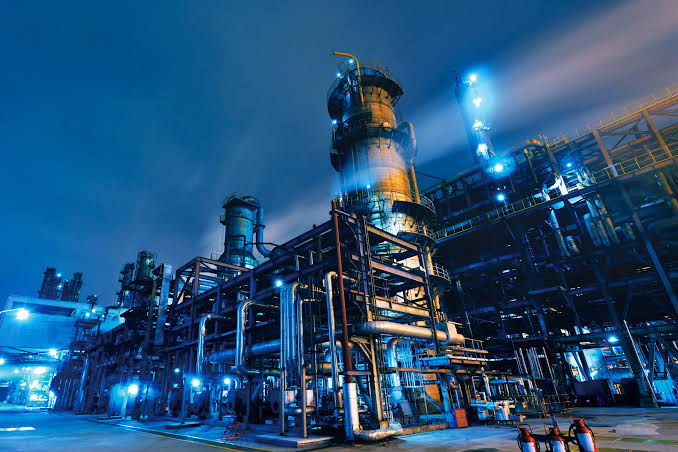
Oil and gas facilities handle flammable hydrocarbons at pressure, often next to people, living quarters and critical equipment. A gas release or a jet fire develops in seconds, so a fire and gas system has three jobs: see the hazard early, decide correctly, and act without hesitation. ZE-Tronics has spent more than a decade doing exactly that for production, processing and export facilities in Azerbaijan and the wider Caspian region.
We work as a specialist subcontractor to operators and Tier-1 EPC contractors — engineering the detection layout, supplying certified equipment, installing and commissioning it, and keeping it calibrated for the life of the asset. For a deeper view of how the architecture changes between production, pipelines and refining, see our Oil & Gas upstream, midstream and downstream solution.
| Hazard | What makes it difficult | Typical detection approach |
|---|---|---|
| Hydrocarbon gas release | Gas disperses quickly in open, windy modules; a single point may never see the cloud. | Open-path IR across the module plus point IR detectors at likely accumulation points; acoustic detection for pressurised leaks. |
| Hydrogen sulphide (H2S) | Toxic at low concentrations and quickly dulls the sense of smell. | Toxic gas detectors at sour-service equipment, with low alarm set points and clear evacuation signals. |
| Jet and pool fires | Fire grows in seconds; hot surfaces, flares and sunlight can cause false alarms. | Multispectrum IR flame detectors with verified field of view and false-alarm immunity. |
| Hydrogen fires | Almost invisible flame with a different radiation signature. | Flame detectors specifically approved for hydrogen, plus hydrogen gas detection. |
| Fires in enclosures and buildings | Turbine hoods, electrical and control rooms need early warning without spurious releases. | Heat, smoke and aspirating detection interlocked with ventilation and gaseous suppression. |
For open process areas we typically use multispectrum infrared detectors such as the Det-Tronics X3301, which respond to hydrocarbon fires while rejecting sunlight, hot bodies and arc welding. Where a combined ultraviolet and infrared view helps, the X5200 UV/IR detector is an option. Detector positions are verified with fire and gas mapping rather than chosen by rule of thumb.
Detection is only useful if people and systems respond. We supply explosion-proof sounders and beacons from e2S, fire and gas controllers from Det-Tronics and Autronica, and interface them with deluge, foam, water mist and gaseous suppression. For burners and fired heaters, Fireye flame scanners and burner management components keep combustion safe.
A fire and gas system rarely acts alone. Confirmed gas typically trips ventilation and ignition sources and initiates shutdown; confirmed fire releases deluge or suppression. We agree voting logic (for example two-out-of-N confirmation before executive action), alarm set points and the cause-and-effect matrix with the operator, and deliver the interface to the ICSS, ESD and HVAC systems. Where the design calls for functional safety, we work to the SIL targets defined under IEC 61511. Read more on our SCADA and DCS integration service.
The project specification, the operator’s own standards and local fire-safety requirements always take precedence and are reflected in the design basis.
Upgrading an ageing system? We audit what is installed, identify obsolete detectors and controllers, and plan a phased migration that keeps the plant protected throughout — see lifecycle maintenance and support.
We take part in concept and FEED studies, produce detection layouts and cause-and-effect matrices, supply certified equipment, install it with CompEx-certified technicians, witness FAT, run SAT and commissioning, and then calibrate and maintain the system in our own accredited laboratory in Baku. The engineers who designed a system are the ones who support it.
Multispectrum IR and UV/IR detectors selected for hydrocarbon, hydrogen and flare-affected areas.
Combustible and toxic gas (including H2S) detection matched to release scenarios and ventilation.
Voting, alarm philosophy and SIL-rated outputs to ICSS, ESD, HVAC and deluge.
Zone-appropriate Ex equipment, cable glands and junction boxes, installed and inspected to IEC 60079.
Ex sounders, beacons and PA/GA interfaces that remain audible and visible on a noisy deck.
AZS ISO/IEC 17025:2020 calibration, stock in Baku and London, in-house electronics repair.
Most sites combine optical flame detection, point and open-path combustible gas detection, H2S detection where sour service exists, smoke and heat detection in buildings, Ex alarm devices and a fire and gas controller that interfaces with the emergency shutdown system. The exact mix comes from the hazard analysis and fire and gas mapping for each area.
Yes. Our team has installation and maintenance experience on Caspian offshore production platforms. Technicians hold CompEx certification for work in hazardous areas, and equipment is selected for salt-laden air, wind and temperature swings.
Follow the manufacturer’s instructions and the plant’s own inspection plan. Many operators combine periodic calibration with more frequent bump tests. Our AZS ISO/IEC 17025:2020 accredited laboratory in Baku issues traceable certificates, so detectors do not need to leave the country.
Yes. We define the interface, alarm philosophy and cause-and-effect with the operator’s control-system team, test it at FAT and prove it again at SAT. Upgrades on running plants are planned around permits, bypasses and shutdown windows.
We supply and support equipment from established manufacturers including Det-Tronics, e2S, Fireye, Autronica and Securiton, and select products by certification, performance data and the project specification rather than by habit.