Azərbaycan
  Русский
 Training & Competency Development
Operator and technician training on fire and gas systems, hazardous area awareness and safe response — delivered in English, Azerbaijani and Russian.
The most reliable safety system in the world depends on people who understand what it is telling them.
An operator who does not know the difference between a low gas alarm and a confirmed high alarm will respond to both the same way — or to neither. A technician who does not understand why a particular gland type was specified will replace it with what is in the store. A supervisor who does not understand the impairment implications of isolating a detector loop will isolate it for a shift and forget.
Competency is the layer of protection that no amount of hardware substitutes for.
Operator training
For control room and field operators who interact with fire and gas systems daily.
- How detection technologies work, and what each one can and cannot see
- Interpreting alarms: low gas, high gas, confirmed fire, fault — and what each demands
- Reading and understanding the cause-and-effect matrix for your facility
- Executive action consequences — what happens automatically, what requires a human decision
- Manual call points and manual release: when, and when not
- Recognising and responding to system faults
- Correct use of inhibit and override, and the discipline of restoring them
- Emergency response coordination and escalation
Technician training
For instrument and maintenance technicians who work on the equipment.
- Detector operating principles, drift behaviour and failure modes
- Bump testing versus calibration — what each proves
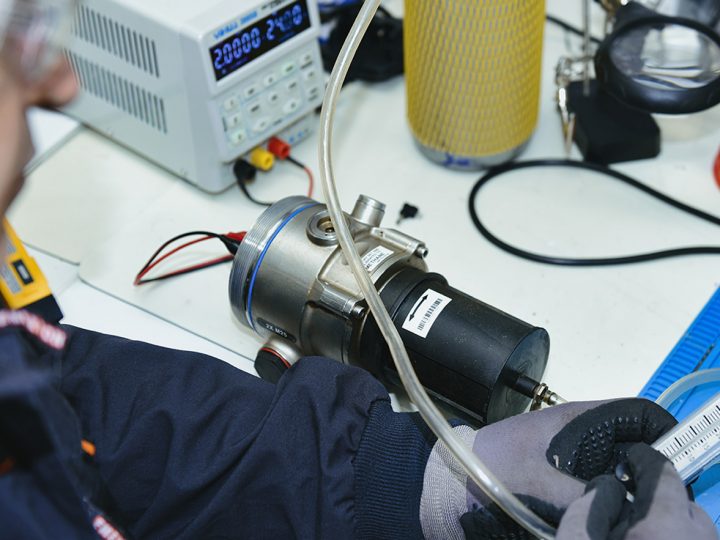
- Correct calibration procedure, adapters, gas concentrations and flow rates
- Fault diagnosis on detection loops
- Panel maintenance, battery testing and power system checks
- Correct handling of Ex-certified equipment
- Documentation and record-keeping standards
- Impairment management and permit discipline
Hazardous area awareness
For anyone working in or entering classified areas — including contractors, who are statistically over-represented in Ex-related incidents.
- Why areas are classified, and what Zone 0, 1 and 2 actually mean
- The explosion triangle and realistic ignition sources
- Protection concepts — Ex d, Ex e, Ex i, Ex p — and what each relies on
- Why an “identical looking” replacement part may not be identical
- Actions that compromise protection: opening enclosures, incorrect glands, damaged seals, unauthorised modification
- Permit-to-work in classified areas
- Recognising and reporting a compromised installation
System-specific training
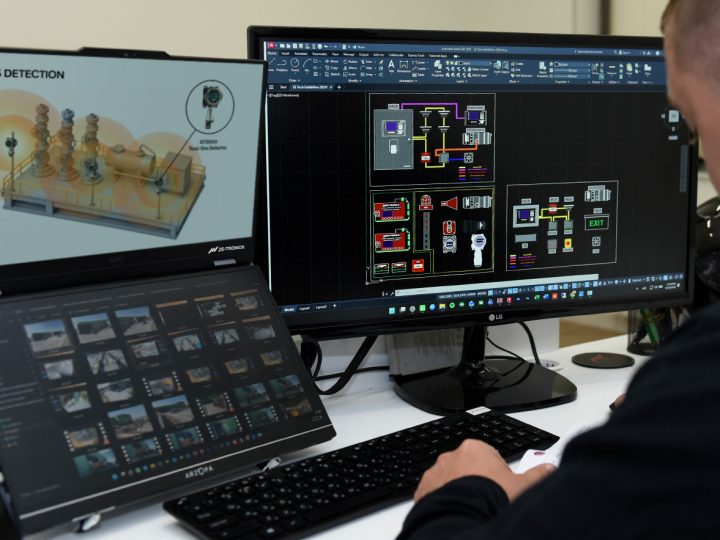
Delivered on your equipment, using your cause-and-effect matrix, with your tag numbers and your graphics. Generic training teaches principles; system-specific training builds the recognition that operates under pressure. We deliver this as part of commissioning handover and as periodic refresher training.
Delivery
Languages: English, Azerbaijani and Russian. Technical training delivered in a second language loses a substantial proportion of its content — we teach in the language your team actually works in.
Our engineers hold CompEx certification and work daily with IECEx and ATEX requirements, so training is delivered by people who install and maintain these systems rather than by full-time trainers.
Competency assessment
Training and competency are not the same thing. Attendance proves exposure; assessment proves capability. We support competency gap assessment against role requirements, structured assessment against defined criteria, records suitable for regulatory demonstration, and refresher scheduling based on assessed need rather than a uniform calendar interval.
Frequently asked questions
Can training be delivered during a shutdown?
Yes, and turnarounds are often the best window since the workforce is available and systems can be demonstrated safely.
Can you train on equipment from other suppliers?
Yes. Training covers the principles and the specific systems installed, regardless of who supplied them.