Azərbaycan
  Русский
 Burner Management Systems and Flame Scanners: A Practical Guide for Boilers and Furnaces
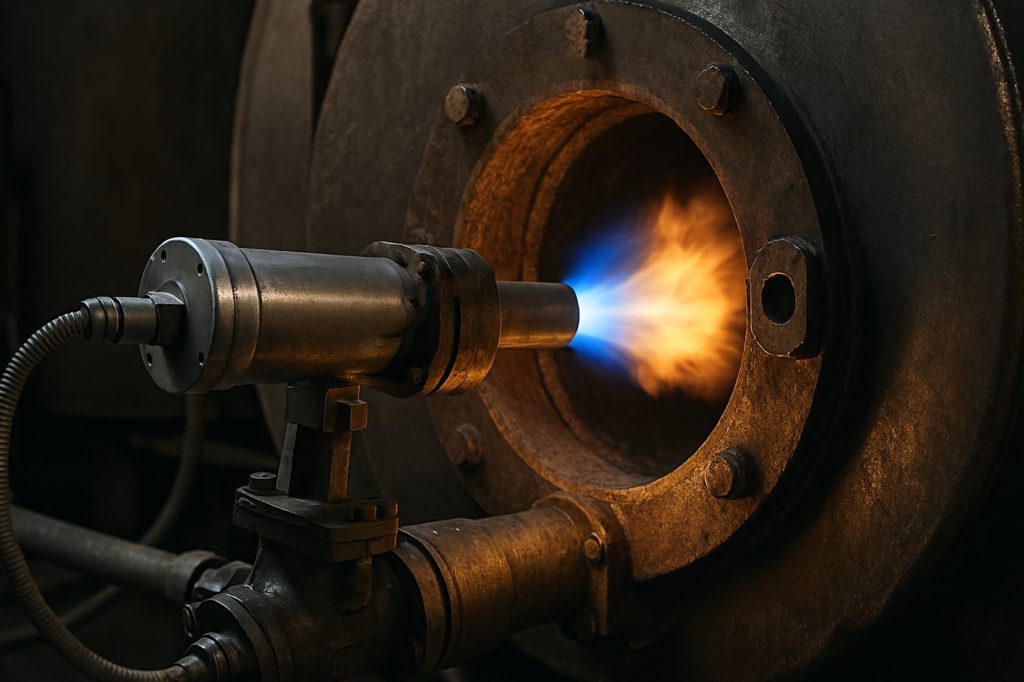
Boilers, fired heaters and furnaces hold a lot of energy in a small space. The most dangerous moments are start-up, when unburnt fuel can accumulate, and flame failure, when fuel keeps flowing into a furnace with no flame. A burner management system (BMS) exists to prevent both.
What a burner management system does
- Checks permissives — fuel pressure, air flow, interlocks and valve positions — before a start is allowed.
- Purges the furnace with air to remove combustible gases. Codes set minimums, typically expressed as a number of furnace volume changes and a minimum time.
- Proves the pilot within a limited trial-for-ignition time, then opens the main fuel and proves the main flame.
- Supervises the flame continuously while the burner runs.
- Shuts down safely on flame failure or any unsafe condition, closing fuel valves within the time the code allows, and locks out until reset.
Many systems also include valve proving, which checks the tightness of the safety shut-off valves before start-up.
Flame scanners: the eyes of the BMS
UV scanners
UV scanners detect ultraviolet radiation from the flame, which is strongest near the flame root. They are widely used for gas firing and many oil flames. Because a UV tube can fail in a way that looks like a flame, burners that run continuously for long periods need self-checking scanners, which test the sensor regularly — for example with a mechanical shutter.
IR scanners
IR scanners respond to the flicker of infrared radiation from the flame. They are common on oil and solid fuels. Hot refractory also emits infrared, so IR scanners rely on flicker analysis to tell flame from hot walls.
Flame rods
On small gas burners and pilots, a flame rod uses the electrical conductivity of the flame itself.
Multi-burner discrimination
On a boiler or heater with several burners, each scanner must see its own burner and ignore the others. Good discrimination depends on:
- Sighting along the burner axis towards the flame root, where the flame is most distinctive
- Scanner settings that separate the burner’s flame signature from background radiation
- Testing with neighbouring burners on and the supervised burner off — the scanner must report “no flame”
Why burners trip when the flame looks fine
- Dirty or hot lenses — cooling and purge air may be missing or contaminated
- Poor sighting after maintenance or burner changes
- Thresholds set too close to the normal flame signal
- Flame instability from air/fuel ratio or burner wear
- Ageing scanners and loose or damaged wiring
Reviewing flame signal trends and the controller’s event history usually points to the cause faster than replacing parts.
Codes and standards
| Standard | Scope |
|---|---|
| NFPA 85 | Boiler and combustion systems hazards |
| NFPA 86 | Ovens and furnaces |
| EN 298 | Automatic burner control systems |
| EN 746-2 | Industrial thermoprocessing — combustion and fuel handling |
| IEC 61511 | Where the BMS is implemented as a safety instrumented system |
Combustion control
Safety comes first, but efficiency matters too. Parallel-positioning controls set fuel and air valves on characterised curves, and oxygen trim can correct for changes in fuel and ambient conditions. Stable combustion also makes flame supervision more reliable.
How ZE-Tronics helps
We select and sight flame scanners, commission flame safeguard controls, review BMS logic against the applicable code, and troubleshoot nuisance trips. We work with equipment from Fireye, including InSight and Phoenix scanners, and integrate BMS with plant control via our ICSS services. See our power and petrochemical solutions or contact an engineer.
Frequently asked questions
What is the difference between a flame scanner and a flame detector?
A flame scanner supervises a specific burner inside a boiler or furnace as part of a burner management system. A flame detector watches an area for accidental fires as part of a fire and gas system.
Why do continuous burners need self-checking scanners?
Some sensor failures can look like a flame. A self-checking scanner tests itself regularly so that a failed sensor cannot keep reporting a flame during long periods of operation.
How often should a burner management system be tested?
Follow the applicable code, the manufacturer and the site's safety procedures. Flame failure tests, interlock checks and valve proving are commonly part of scheduled maintenance.
Can an old burner management system be upgraded without replacing the burner?
Usually yes. Controls, scanners and valve trains can often be upgraded around the existing burner, subject to a review against the current code.