Azərbaycan
  Русский
 Procurement & Certified Equipment Sourcing
Sourcing certified fire and gas equipment from established US and EU manufacturers, with certification verification against your actual area classification.
Safety equipment procurement fails in a specific and recurring way: the certificate is real, the equipment is genuine, and it is still wrong for the installation. A device certified Ex d IIB T4 installed in a IIC hydrogen area is a compliance failure that a purchase order review will not catch — only an engineer comparing the certificate to the area classification will.
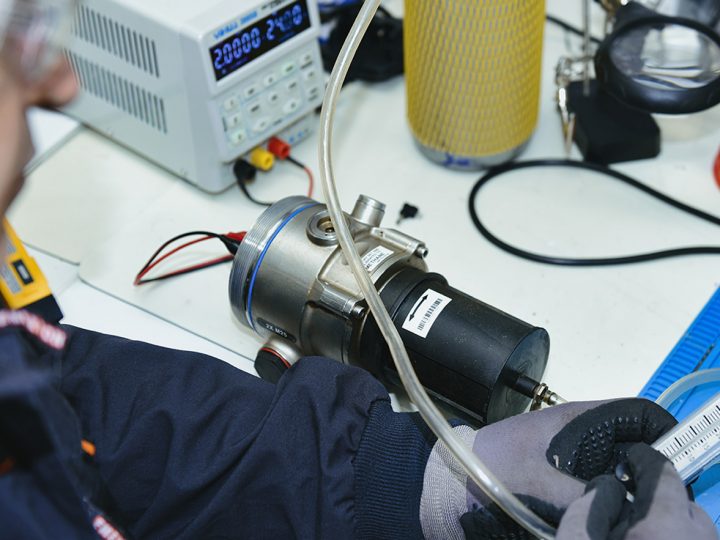
ZE-Tronics procures fire and gas safety equipment through direct alliances with established US and European manufacturers, and verifies every item against the actual conditions of your installation before it ships.
Certification verification
Every device we supply is checked against your area classification for:
- Protection concept — Ex d, Ex e, Ex i, Ex p, Ex n — and its suitability for the assigned zone
- Gas group — IIA, IIB, IIC — against the specific gases credibly present, not the generic site classification
- Temperature class — T1 to T6 — against the auto-ignition temperature of those gases
- Ambient temperature range — the certificate’s stated range against your actual site extremes, which in the Caspian region span a wide seasonal band
- Ingress protection — IP rating against the physical environment
- Certification validity — that the certificate is current, issued by a recognised body, and covers the exact model and variant
- SIL capability — where the device forms part of a safety instrumented function
This verification is the service. The equipment is available from many sources; the assurance that it is the correct equipment is not.
Why a direct manufacturer chain matters
Counterfeit and grey-market safety equipment is a real problem in this region — devices bearing convincing certification marks, sold at attractive prices, that have never been through a notified body assessment. A direct manufacturer relationship is the only reliable defence, and it also secures authentic certification documentation, factory technical support during design, and a warranty chain that does not break at a distributor boundary.
Equipment categories
Gas detection — catalytic bead, infrared point, open-path infrared, ultrasonic leak detection, electrochemical toxic, oxygen monitoring
Flame detection — UV, IR, UV/IR, multi-spectrum IR
Flame monitoring — burner flame scanners and combustion safeguard systems for boilers and reformers
Notification — Ex-certified sounders, beacons, combined units, manual call points
Ex installation hardware — Ex junction boxes, Ex cable glands
Explosion-proof smoke and heat detection — for classified areas where standard detection cannot be used
Fire suppression — clean agent, self-contained systems, mobile units
Control and interface — fire and gas panels, safety controllers, addressable modules, marshalling
Procurement process
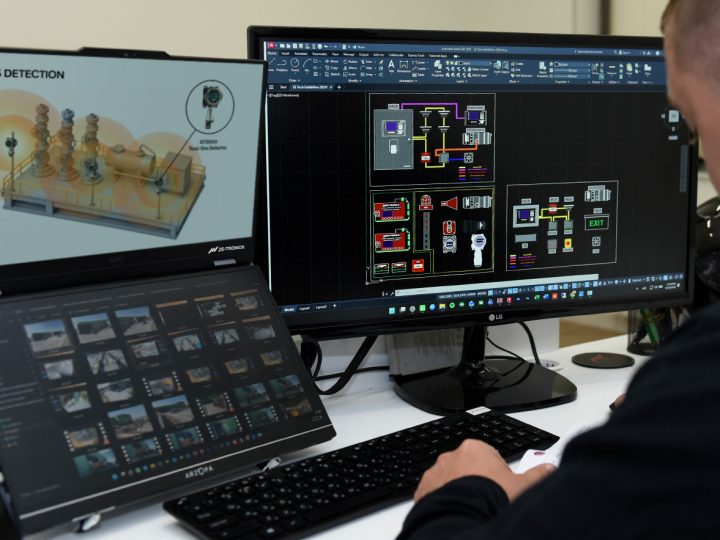
- Technical review — the requisition is checked against area classification, cause-and-effect matrix and SIL verification. Discrepancies are raised before enquiry, not after delivery
- Sourcing — enquiries issued to manufacturer partners with full technical requirements attached, not just a part number
- Technical bid evaluation — offers assessed on certification compliance, delivery, spares availability, obsolescence horizon and lifecycle cost, not unit price alone
- Documentation review — certificates, declarations of conformity, test reports and traceability compiled before shipment approval
- Factory Acceptance Testing — for panels and integrated systems, FAT is coordinated and witnessed against the approved cause-and-effect matrix
- Logistics — shipping, customs clearance and delivery to site
- Handover dossier — certificates, datasheets, manuals, test records, spares lists and warranty terms
Stock staged in Baku and London
Critical equipment inventory is held strategically in Baku and London. For an operator facing an unplanned failure, the difference between a local warehouse and a manufacturer lead time is the difference between a shift and a quarter.
Obsolescence planning
Safety equipment outlives its product line. A detector installed today may need spares in fifteen years. We advise on obsolescence horizon at selection stage, recommend spares holding based on lead time and criticality, and monitor manufacturer lifecycle announcements for equipment we have supplied — so a discontinuation notice reaches you while migration is still a plan rather than an emergency.